
The best pizza in Marbella: how to spot a real Neapolitan pizza
How to tell a real Neapolitan pizza from the rest: 48-hour dough, a wood-fired oven, San Marzano tomato and hand-stretched bases — and where to find all four in Marbella.
Published on
The best pizza in Marbella: how to spot a real Neapolitan pizza
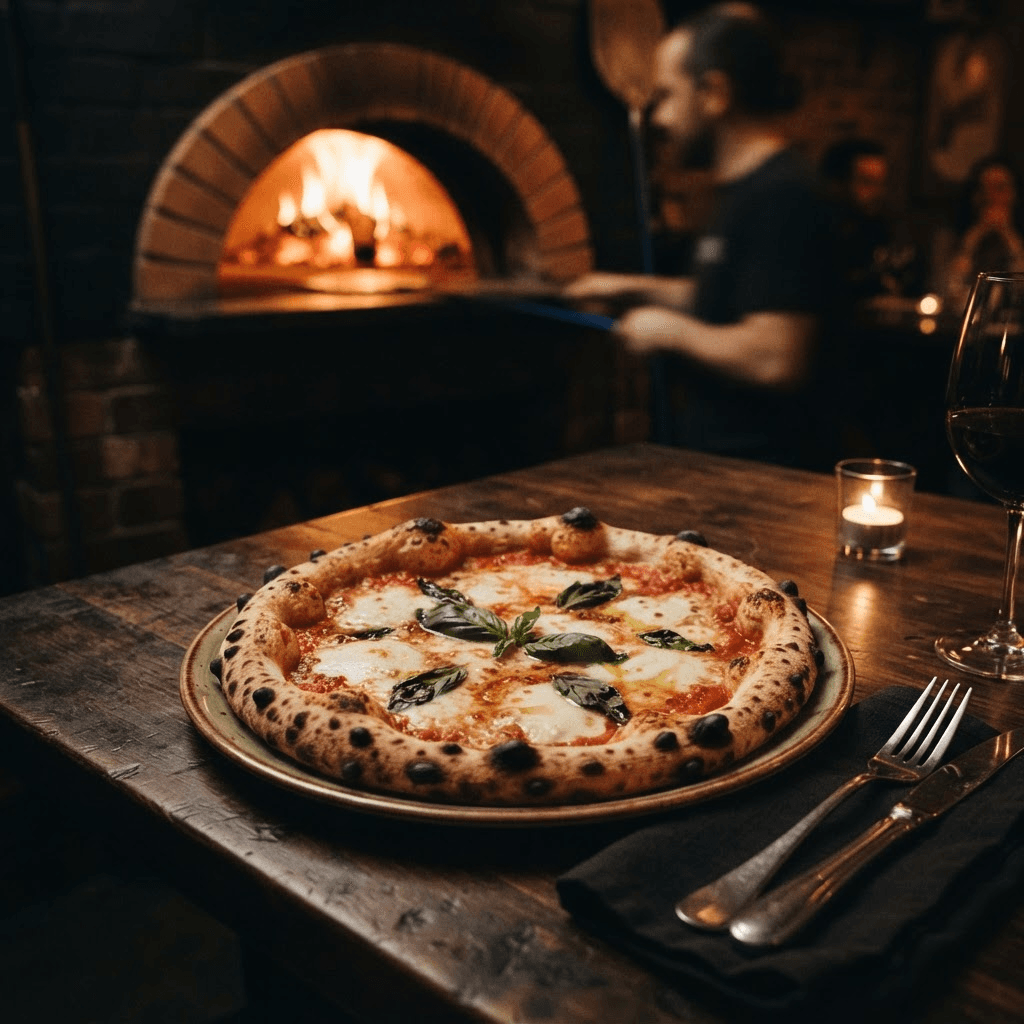
Marbella is full of places selling pizza. Very few of them are making Neapolitan pizza in the proper sense. If you want to know what you are eating before you order, this guide gives you the four things to check — and where to find them in Marbella.
1. The dough: 48 hours, not 48 minutes
This is where almost everything is decided. A genuine Neapolitan base uses very little yeast and a slow fermentation of 24 to 48 hours. That long rest gives the crust its airy, blistered edge — the cornicione — and makes it far easier to digest.
Dough made the same morning rises fast, tastes of raw yeast and sits heavy afterwards. If a pizza leaves you feeling stuffed and thirsty an hour later, that is usually the dough talking.
At Pizzeria Desidero our dough ferments for 48 hours before it ever sees the oven.
2. The oven: real wood, real heat
A Neapolitan pizza cooks in 60 to 90 seconds at around 450 °C. Only a wood-fired oven reaches that. The result is a base that is soft and pliable at the centre, charred in spots at the rim, never dry or cracker-like.
An electric conveyor oven at 300 °C produces something else entirely: uniform, pale, crisp all the way through. Perfectly edible — just not Neapolitan.
3. The ingredients: fewer and better
Real Neapolitan pizza is minimalist:
- San Marzano tomatoes — grown in volcanic soil near Vesuvius, sweet and low in acidity, crushed raw rather than cooked into a sauce.
- Fior di Latte or buffalo mozzarella — fresh, milky, torn by hand, never the dry grated kind.
- Extra virgin olive oil — added raw, after baking.
- Fresh basil — leaves, not dried flakes.
A Margherita made this way has four ingredients and needs no more.
4. The pizzaiolo: how it is handled
Neapolitan dough is stretched by hand, from the centre outwards, pushing the air into the rim. Never with a rolling pin, never in a press — both crush out the gas bubbles that give the crust its structure.
Where to eat Neapolitan pizza in Marbella
At Pizzeria Desidero, on Calle Juan Ruiz Muñoz 4, all four points above are simply how we work: 48-hour dough, a wood-fired oven, San Marzano tomato and Fior di Latte, stretched by hand.
Pizzas worth ordering on your first visit:
- Margherita (€8.00) — the benchmark. If a pizzeria gets this right, it gets everything right.
- Mortazza (€13.00) — our house speciality: mortadella, Sicilian pistachios and burrata.
- Burrata (€13.50) — creamy burrata added after baking, cherry tomatoes and rocket.
- Diavola (€11.00) — for those who want some heat.
- Marinara (€6.50) — no cheese at all: tomato, garlic, oregano and oil. The oldest pizza there is, and the purest test of a dough.
More than pizza
We are an Italian restaurant in Marbella, not only a pizzeria. Alongside the wood-fired pizzas you will find fresh pasta made daily — carbonara the Roman way, lasagne, spaghetti al pil pil with king prawns — as well as artisan focaccia, burrata and Italian starters.
Gluten-free, vegetarian and halal
- Gluten-free base available for every pizza (+€3.00).
- Plenty of vegetarian options, marked on the menu.
- Halal dishes prepared separately for guests who need certified meat.
Practical details
- Where: C/ Juan Ruiz Muñoz 4, 29602 Marbella
- Hours: every day 16:00 – 02:00 — one of the few real kitchens in town still cooking after midnight
- Takeaway available until closing
- Menu and bookings: desideropizzeria.es
Whether you have just landed at Málaga, live here year-round, or are simply out for dinner on a summer evening — the oven is lit.
More recipes from our kitchen
Low-carb vegan pasta with chickpeas (home recipe)
A light, plant-based low-carb pasta you can make at home: chickpeas, sun-dried tomato and a creamy tomato-basil sauce. An easy recipe from Desidero, Marbella.
Vegan Pumpkin Lasagne (Home Recipe)
A creamy, comforting vegan pumpkin lasagne to make at home: roasted pumpkin, tomato and basil. An easy Italian recipe from Desidero, Marbella.
Gluten-free vegan focaccia (home recipe)
A gluten-free vegan focaccia you can make at home: soft inside, crisp outside, with roasted tomato and onion. An easy recipe from Desidero, Marbella.